

Cafe Insurance Online :: News
SHARE

Share this news item!

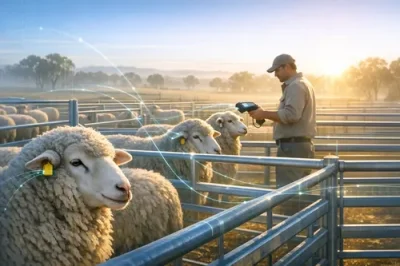
Electronic Livestock Tags Put Farm Records Under the Spotlight

Traceability reforms are a practical reminder to check stock values, claims evidence and biosecurity plans

Electronic Livestock Tags Put Farm Records Under the Spotlight?w=400

The information on this website is general in nature and does not take into account your objectives, financial situation, or needs. Consider seeking personal advice from a licensed adviser before acting on any information.

Australia’s sheep and goat electronic identification rollout is moving from policy discussion into everyday farm management, and its insurance implications should not be overlooked.
Recent rural reporting has highlighted the practical work now facing producers, agents, processors and saleyards as the industry shifts towards stronger individual animal traceability.

For many farm businesses, eID is being treated as a compliance and biosecurity issue. That is understandable. Faster tracing can help authorities respond more effectively to disease threats, stock movements and market-access concerns. But for insurance planning, the same systems can also strengthen the quality of records behind livestock values, ownership, movements and losses.

That matters because livestock claims are often evidence-heavy. After theft, fire, flood, dog attack, transport loss or other insured events, a producer may need to show what stock was on hand, where it was located, how it was identified and what it was worth. Paper records, memory and broad paddock estimates can leave gaps, particularly where mobs are split across multiple blocks or agistment properties.

Electronic tagging will not remove the need for sound management records, nor will it automatically broaden policy wording. However, it may make it easier for producers to reconcile stock numbers, demonstrate movement history and support a claim file. The real benefit comes when eID data is kept consistently and matched with sale documents, breeding records, veterinary notes and on-farm inventories.

Producers should use the rollout as a prompt to review three areas:

  • Whether insured livestock values reflect current market prices, breeding quality and seasonal stocking decisions.
  • How quickly stock records could be produced after a loss, especially during a regional emergency.
  • Whether policy exclusions, disease conditions, transit limits and theft requirements are clearly understood.

There is also a cost-management angle. Tags, readers, software, training and data administration can become part of the operating environment for sheep and goat enterprises. Where technology is mounted in yards, sheds, vehicles or handling systems, it may need to be considered alongside machinery, plant or contents cover.

As with any change in farm operations, the insurance review should be practical rather than rushed. Producers can estimate the replacement value of key assets, then speak with an adviser or broker about how livestock, equipment, liability and business interruption exposures fit together. The eID transition is primarily about traceability, but it is also a timely reminder that accurate records are one of the strongest tools a farm business has when it needs cover to respond.

Published:Wednesday, 2nd Sep 2026
Author: Paige Estritori

Please Note: We do not endorse any specific products or companies. Some content is sourced from third parties, including press releases, and may not be independently verified for accuracy or completeness.

Share this news item:

Rate this article

0 Comments

No comments yet. Be the first to share your thoughts.

Insurance News

Why rising builder failures matter for contract works cover
17 Sep 2026: Paige Estritori
Australia's construction sector remains under pressure, with recent insolvency figures continuing to show building and construction as one of the most exposed parts of the economy. Higher material costs, tight margins, labour shortages, delayed payments and fixed-price contract stress have all contributed to a tougher operating environment for builders, subcontractors and project owners. - read more
How Softer Truck Sales Can Affect Insurance Decisions
17 Sep 2026: Paige Estritori
Recent transport industry sales updates point to a more selective new-truck market, with operators weighing replacement timing against finance costs, emissions planning, availability and contract confidence. For truck businesses, that matters well beyond the showroom. A change in buying momentum can flow through to vehicle values, repair economics, insurer appetite and the way fleets should set insurance sums before renewal. - read more
Cyber Scam Alerts: What Trade Businesses Should Check Now
17 Sep 2026: Paige Estritori
Fresh small business cyber warnings are a practical reminder that digital risk is no longer just a concern for large companies with complex IT systems. For Australian tradespeople, the most damaging cyber incident may be far simpler: a fake invoice, altered bank details, a compromised email account or a scam message that looks like it came from a supplier, builder, real estate agent or client. - read more
Why Super Service Standards Matter for Your Income Protection
17 Sep 2026: Paige Estritori
ASIC’s continuing focus on superannuation member services has put another practical issue in front of Australian workers: insurance inside super is not just about whether cover exists, but whether members can understand and use it when they need help. Recent regulatory attention on trustee administration, communication and claims support is a timely reminder for anyone relying on salary continuance or income protection benefits through their fund. - read more
What More PBS Trucking Means for Insurance Cover
17 Sep 2026: Paige Estritori
Recent transport industry reporting has again highlighted growing interest in Performance Based Standards vehicles and other high-productivity truck combinations across Australia. For operators, the attraction is clear: fewer trips, better payload efficiency and stronger productivity on approved routes. For insurers, however, the shift is not simply a matter of adding another truck to the schedule. PBS combinations can alter exposure across vehicle value, route compliance, load responsibility, driver capability and recovery after an incident. - read more


Cafe Insurance Articles

Understanding Cafe Insurance: What Every Owner Needs to Know
Running a cafe can be a dream come true, but it's not without its challenges. One of the most critical aspects of managing a cafe is ensuring that it's adequately insured. Cafe owners in Australia face various risks, from equipment breakdowns to customer accidents. Without proper insurance coverage, these incidents can translate into significant financial losses. Insurance acts as a safety net, offering protection against unforeseen events and ensuring the business can recover swiftly. - read more
Public Liability and Product Liability for Cafes: How Customer Injury and Food-Related Claims Differ
Customer claims in a cafe can arise from many situations, from a slip on a wet floor to illness allegedly caused by food or drink. This article explains how public liability and product liability differ, where they may overlap, and what Australian cafe owners should check when reviewing their insurance. - read more
Understanding Business Interruption Insurance for Cafes
Business interruption insurance is a specialized type of coverage designed to protect businesses from financial losses due to unavoidable disruptions. Whether it's a natural disaster, a burst pipe, or a local emergency, this insurance helps ensure that the business can continue to meet its financial obligations during downtime. - read more
Cafe Contents, Stock and Equipment Insurance Explained
Cafe contents, stock and equipment insurance can help protect the physical assets a cafe relies on, from coffee machines and fridges to furniture, inventory and some fit-out items. This guide explains what Australian cafe owners should consider when assessing cover, sums insured, spoilage risks and common policy limitations. - read more
How to Choose the Right Insurance for Your Coffee Shop
Running a coffee shop involves more than simply brewing the perfect cup of coffee. It requires a sound understanding of the business's risks and a strategic approach to managing them. Choosing the right insurance coverage is crucial for safeguarding your investment. - read more

Knowledgebase
Subrogation:
The process by which an insurance company seeks to recover the amount paid to the policyholder from a third party responsible for the loss.